
The 36th Men’s European Championships, which will begin on Saturday in Belgrade, will celebrate the 100th anniversary of the championship’s founding. The inaugural edition took place in Budapest in 1926.
Until 1997, the continental water polo championships were part of the European Championships for all aquatic sports.
This will be the fifth winter continental water polo championship, following those held in 2012, 2016, 2020, and 2024. However, the upcoming tournament at the Belgrade Arena, which hosted the championship for the first time in 2016, will be the first winter European Championships held in a non-Olympic year. The decision to move the tournament to winter, announced last year, came as quite a surprise.
As every major competition approaches, it’s customary to reflect on its history. Most facts about the history of the European Championships are well known.
This article highlights some records that are likely to endure, although a few might be broken in Belgrade this year.
Some of these records are a point of pride, while others are far from flattering.
Hungary’s dominance
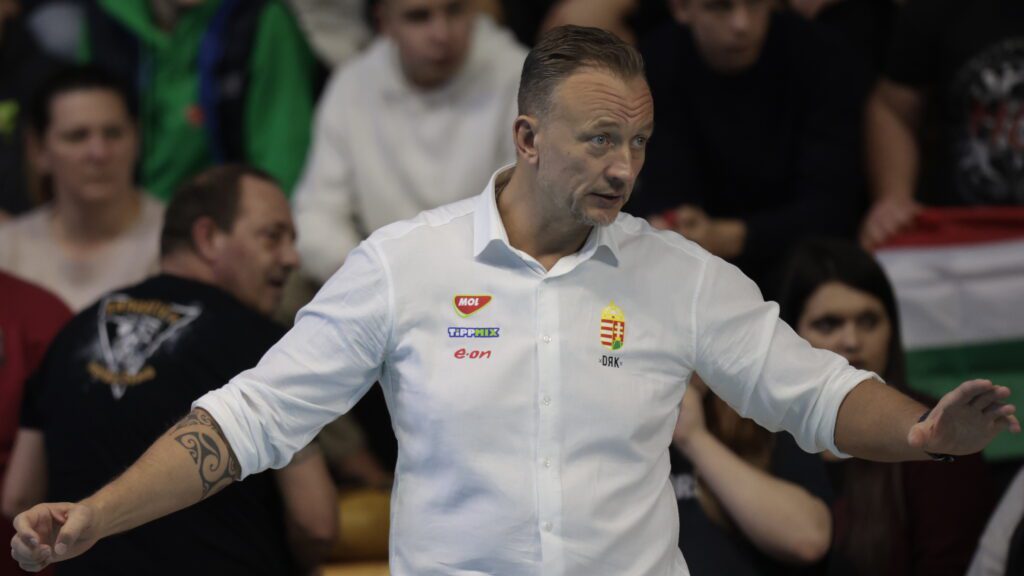
Hungary, the most successful country in the history of water polo, tops every all-time list of big water polo competitions.
As for the Europeans, the Hungarians have competed in 35 editions of the continental championships (missing only the 1950 ECH due to political reasons, as the tournament was held in part of Vienna under NATO control).
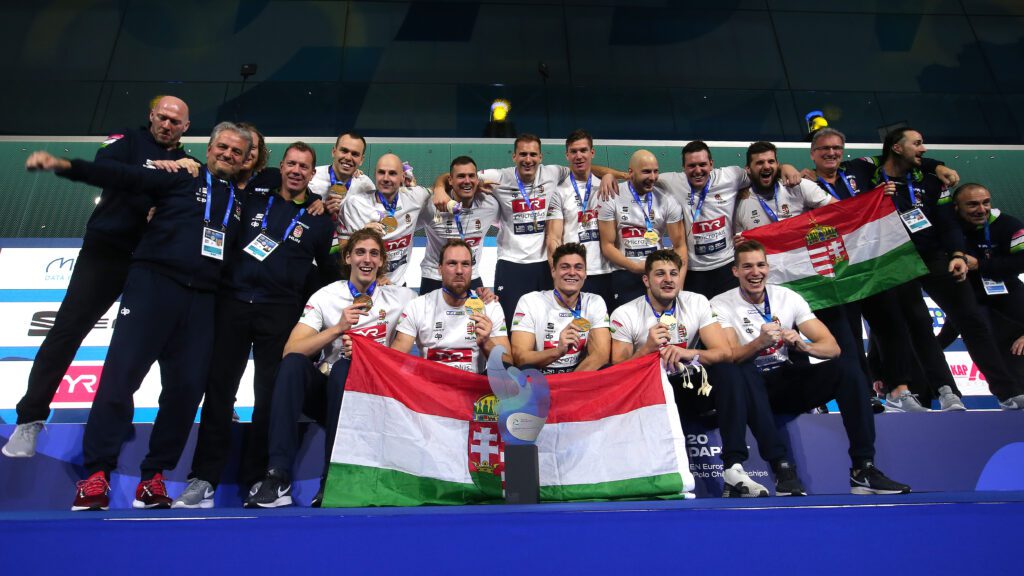
They have won 26 medals, including 13 gold, 7 silver, and 6 bronze. Additionally, they have achieved three 4th-place finishes, placing outside the top 4 only six times. The last time this occurred was in 2018, when Hungary was in 8th place, marking it their second-worst performance, after finishing 9th in 1989.
The next country in the all-time medal table is Serbia, with 22 medals (8,9,5) in 30 appearances, including those won as part of Yugoslavia and Serbia and Montenegro. As an independent country, Serbia has clinched 5 gold, 1 silver, and 1 bronze medal since 2006.
Hungary is the only nation to have won five consecutive gold medals, achieving this feat at the first five European championships held in 1926, 1927, 1931, 1934, and 1938. Serbia closely follows, with four consecutive titles won between 2012 and 2018.
In terms of goals scored, Hungary is the only country to have surpassed 2,000 goals, with a total of 2,184 goals as of the conclusion of the 2024 tournament. Italy and Serbia are close to 2.000 goals mark, having scored 1,839 and 1,823 goals, respectively.
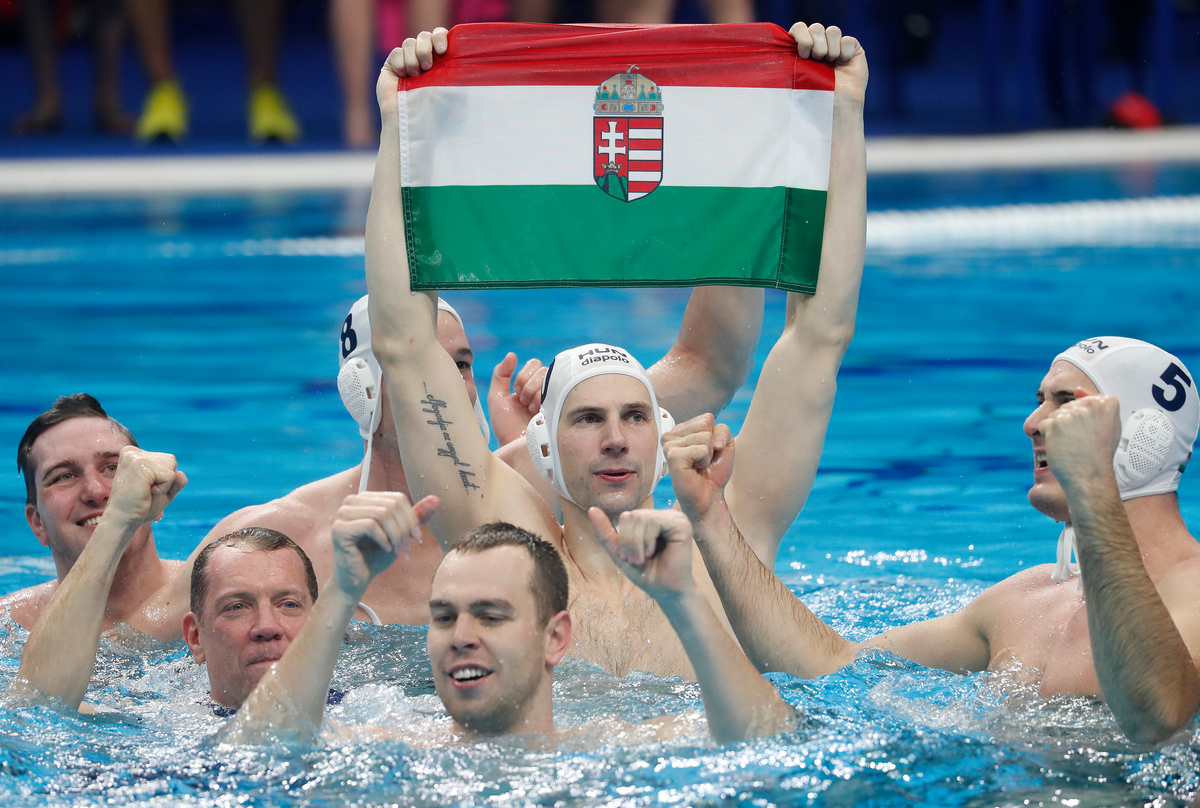
Denes Varga Photos Laszlo Balogh/Total Waterpolo
Hungary has played 233 matches at the European Championships, winning 176. Serbia ranks second, with 147 wins in 209 games (including results of the national teams of Yugoslavia). Italy is in third place with 128 victories out of 225 matches, having participated in the Europeans 34 times.
Hungary is likely to remain at the top of the all-time ranking lists for a long time, maybe forever. Some of the records won’t be surpassed soon.
Hungary achieved the most convincing victory in the history of the European championships, defeating Malta 26:0 in Budapest in 2020. This match was crucial for goal difference as the hosts aimed to secure first place in their group ahead of Spain.
Prior to this game, Croatia held the record for the biggest margin of victory with a 26:2 win over Austria in Vienna in 1995.
Filip Filipovic’s and Tamas Kasas’ records will last for a long time
Since 2018, Filip Filipovic has held the record for the most gold medals, winning his sixth European title. Until then, he shared the record with his former teammates Zivko Gocic and Slobodan Nikic. The two won their 5th golds in 2016, along with Filipovic, but they retired from the national team after the Rio de Janeiro Olympics.
Filipovic’s record will remain untouchable this year.
Only four players who are still active in their national teams have won more than one gold medal, and all of them represent Serbia.
A 35-year-old Milos Cuk has four titles to his name, won between 2012 and 2018. Dusan Mandic (32) and Sava Randjelovic (33) have both reached the top of the podium three times, earning gold medals in 2014, 2016, and 2018. The current captain of Serbia, Nikola Jaksic (28), was part of the winning team in 2016 and 2018.
In addition to his six gold medals, Filipovic also won one silver and one bronze. He shares the top spot on the list of multiple medalists with Hungarian Tamas Kasas, who has two golds, two silvers, and four bronzes.
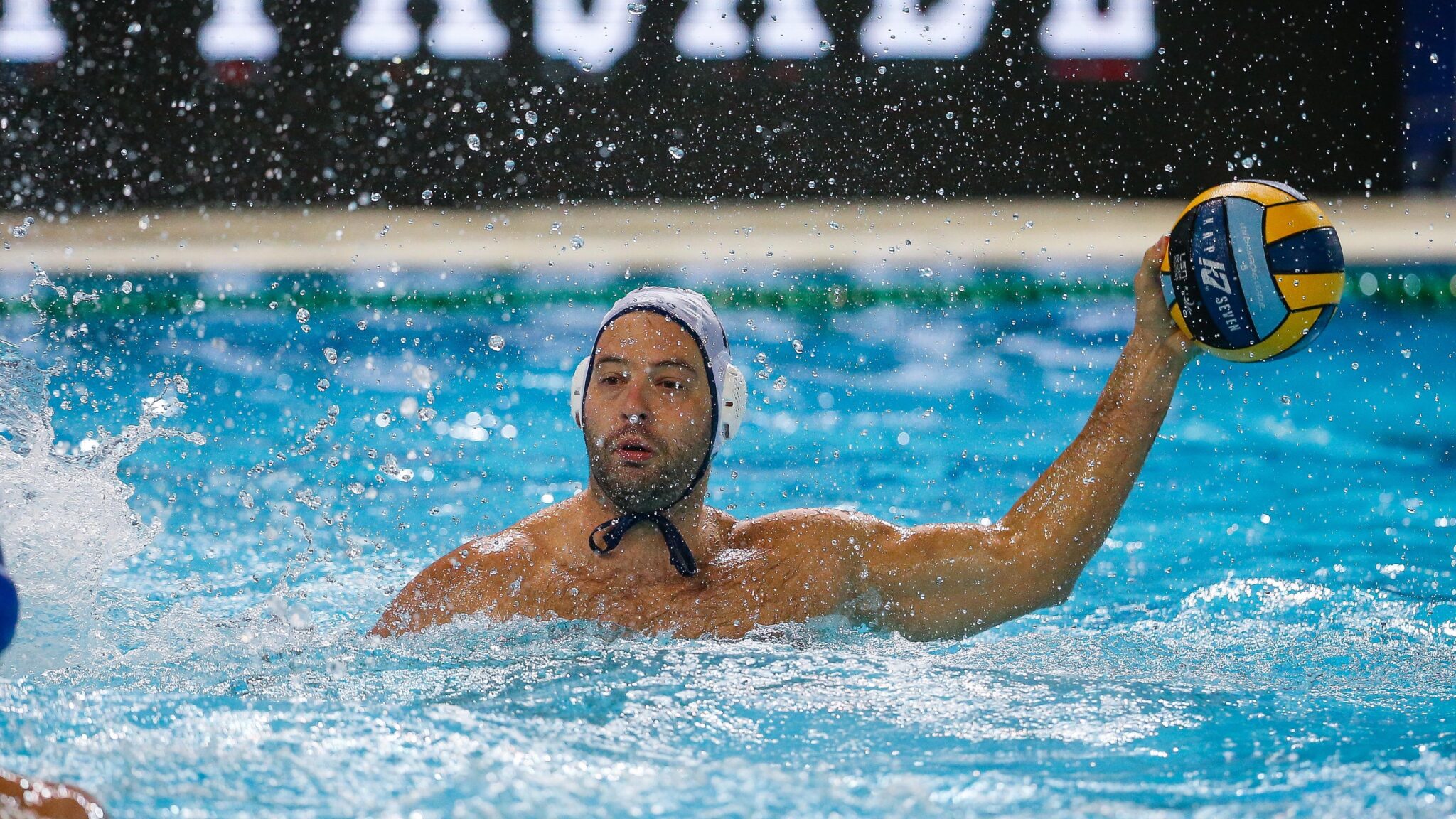
Filip Filipovic Photo by Slobodan Sandic
The record held by Filipovic and Kasas is likely to remain unbroken for a long time.
None of the players who have not yet retired from their national teams have won five medals. Milos Cuk and six Spaniards have each claimed four medals. Alberto Munarriz (31), Alvaro Granados (27), Miguel de Toro (32), Marc Larumbe (31), Roger Tahull (28), and goalkeeper Eduardo Lorrio (32) were all part of the Spanish teams that secured one gold, two silver, and one bronze medal between 2018 and 2024.
Given that none of these seven players can match Filipovic and Kasas’s achievements before 2032, and considering their ages, Granados and Tahull have the best chances of winning their eighth medals at the European Championships.
The players with six medals and more
- 8 (6,1,1): Filip Filipovic (Serbia and Montenegro/Serbia, between 2003 and 2018)
- 8 (2,2,4): Tamas Kasas (Hungary, 1995 – 2012)
- 7 (5,1,1): Slobodan Nikic (Serbia and Montenegro/Serbia, 2003 – 2016)
- 7 (5,1,1): Dusko Pijetlovic (Serbia, 2006 – 2018)
- 7 (5,1,1): Andrija Prlainovic (Serbia, 2006 – 2018)
- 7 (2,3,2): Rajmund Fodor (Hungary, 1993 – 2006)
- 7 (2,1,4): Gergely Kiss (Hungary, 1997 – 2012)
- 6 (5,0,1): Zivko Gocic (Serbia and Montenegro/Serbia, 2003 – 2016)
- 6 (2,1,3): Tamas Molnar (Hungary, 1997 – 2008)
- 6 (1,2,3): Tibor Benedek (Hungary, 1993 – 2008)
- 6 (1,2,3): Denes Varga (Hungary, 2006 – 2020)
- 6 (1,2,3): Norbert Hosnyanszky (Hungary, 2006 – 2020)
- 6 (1,1,4): Peter Biros (Hungary, 1999 – 2012)
27 goals in 28 minutes in the highest-scoring final
The lowest-scoring final match in water polo history was played at the second European Championships in Bologna in 1927, when Hungary defeated France 3:1. At that time, the game duration was only 14 minutes, and until the early 1970s, there was no time limit for ball possession, making such low scores more common.
In modern water polo, the final with the fewest goals was played in Seville in 1997, when Hungary won gold, defeating Serbia 3:2. This was the last tournament in which water polo was included in the European Championships for all aquatic sports.
Conversely, the highest-scoring final match took place just two years later. Hungary defended its title by beating Croatia 15:12 in the gold-medal game of the 1999 Championships in Florence. It should be underlined that the games lasted only 28 minutes and the attack was limited to 35 seconds at that time. Six years later, the matches were prolonged to 32 minutes, and the time for ball possession was reduced to 30 seconds.
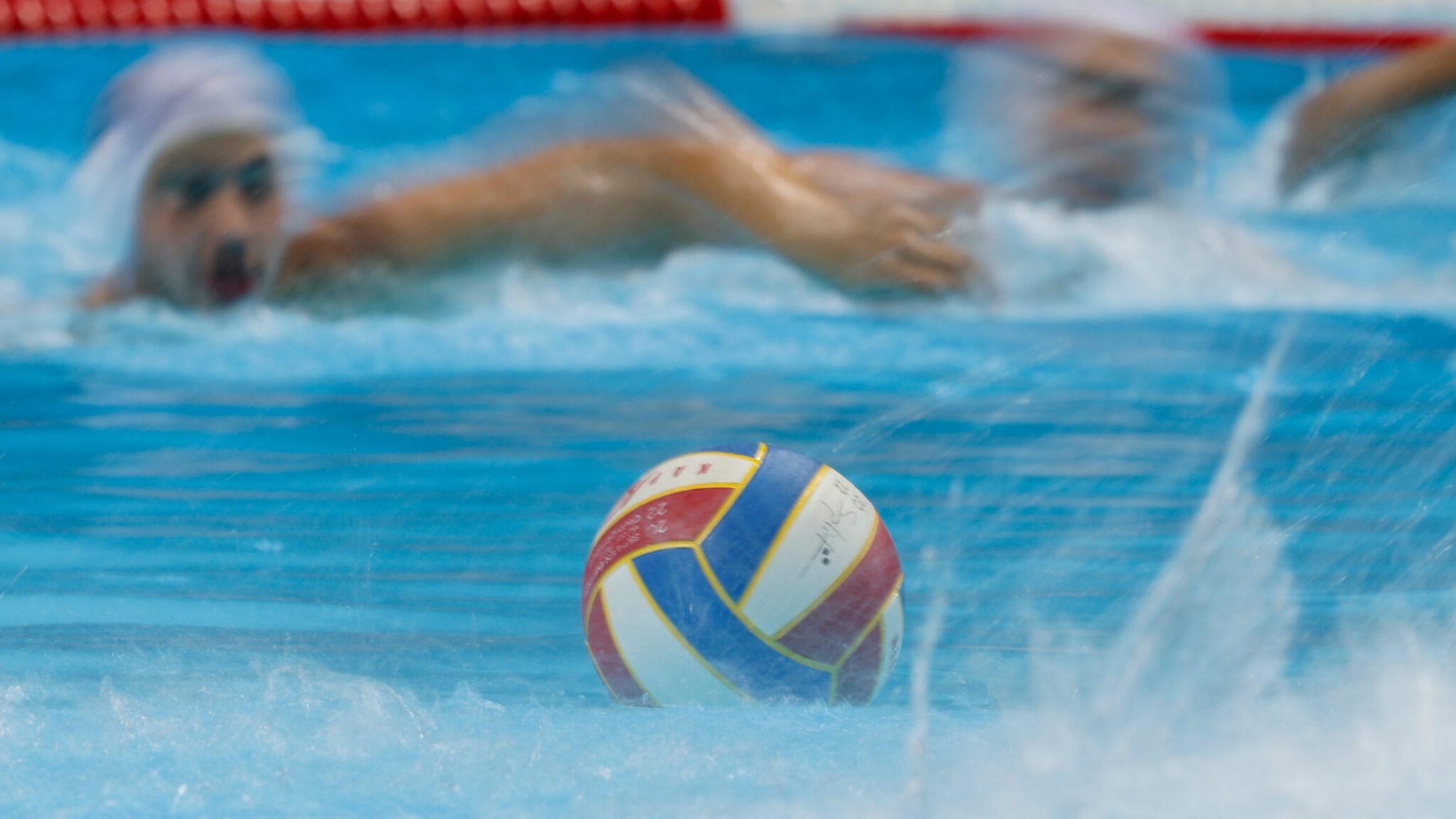
Photo: Total Waterpolo
It’s almost impossible to believe that matches with four or five goals won’t happen again, especially given the recent changes to the rules.
The record of 27 goals in a final could potentially be broken in Belgrade.
Additionally, under the new rules for the shorter field, the upcoming championship is likely to surpass the previous record for average goals per match. So far, the highest-scoring tournament was the last one held in Croatia two years ago, which averaged 22.23 goals per game and totaled 1,067 goals over 48 matches.
There were 21 goals in the final in Zagreb in 2024. Spain edged out Croatia, 12:11.
Two finals ended in penalty shootouts, both featuring Spain as a losing team: Serbia – Spain 12:10 (7:7) in Barcelona in 2018, and Hungary – Spain 14:13 (9:9) in Budapest in 2020.
Highest attendance record to remain untouched
The highest attendance for a single water polo match was recorded at the European Championships in Belgrade in 2016, when 18,473 spectators were in the stands of the Belgrade Arena for the final between Serbia and Montenegro.
That record will not be surpassed this year. The maximum capacity of the stands at the same venue for the 2026 European Championships will be 12,500 seats, as Viktor Jelenic, the President of the Water Polo Federation of Serbia, said.
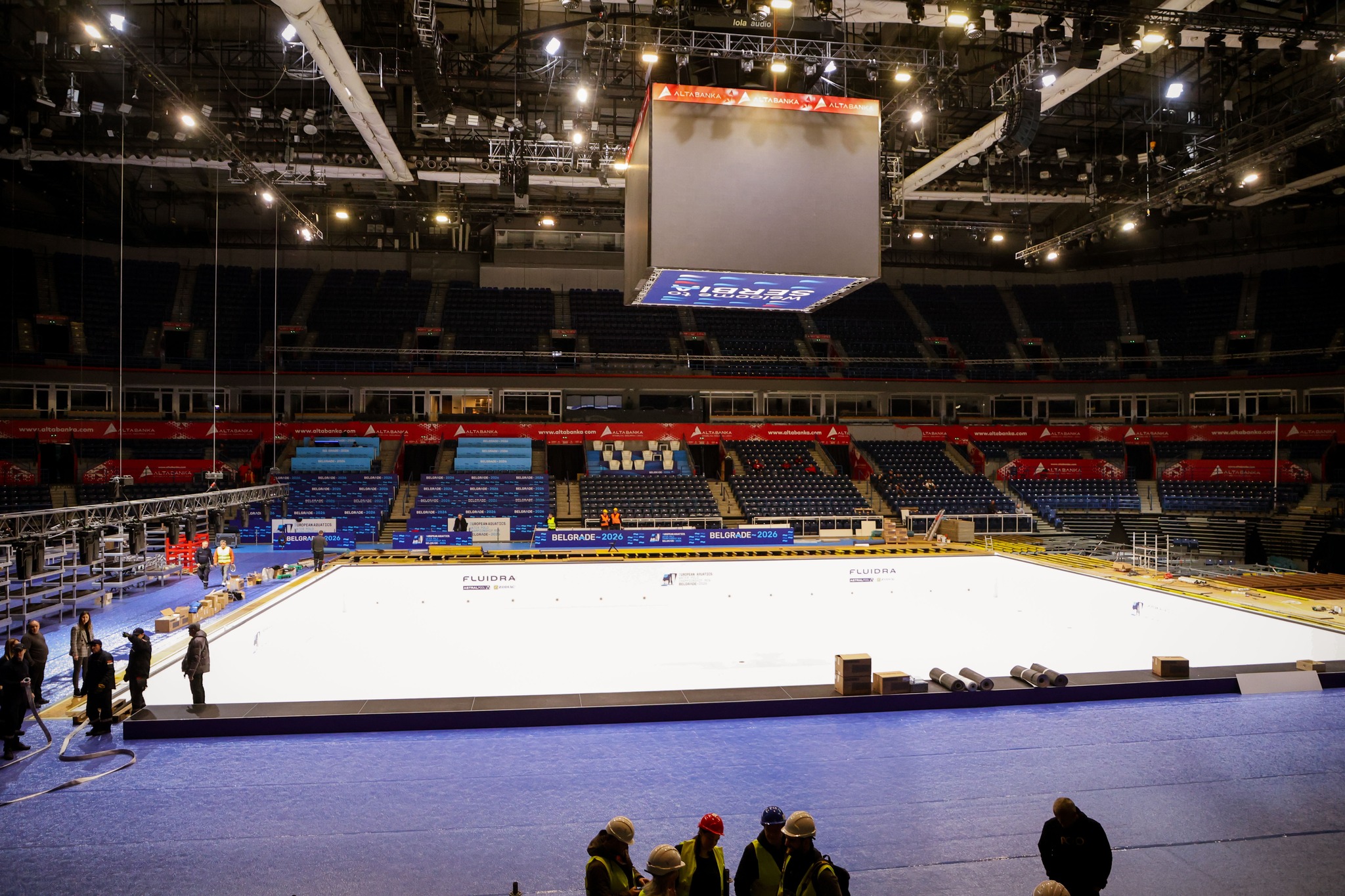
The final preparations of the Belgrade Arena for the European Championships Photo by Slobodan Sandic/WPF of Serbia
Some may have forgotten that ten years ago, the Belgrade Arena stand’s initial capacity was approximately 12,000 spectators. Due to the strong interest from fans of both Serbia and Montenegro, the organizers opened the section located behind the warm-up pool only for the final, which contributed to the record attendance.
According to Viktor Jelenic, the pool level for the 2026 European Championships needed to be raised, resulting in a reduction of the stands’ capacity to 12,500 spectators.
Bad runs of four countries
To conclude, let’s highlight a record that the countries involved would rather not discuss.
Greece, Slovakia, Romania and Great Britain are the only four nations that have participated in 10 editions of the European Championships or more without winning a medal.
Romania has taken part 26 times and has reached the semifinals twice, finishing 4th in 1993 and 2006.
Similarly, Greece has competed in the continental championships 20 times and, like Romania, has made it to the semifinals on two occasions. It won 4th place in 1999 and 2016.
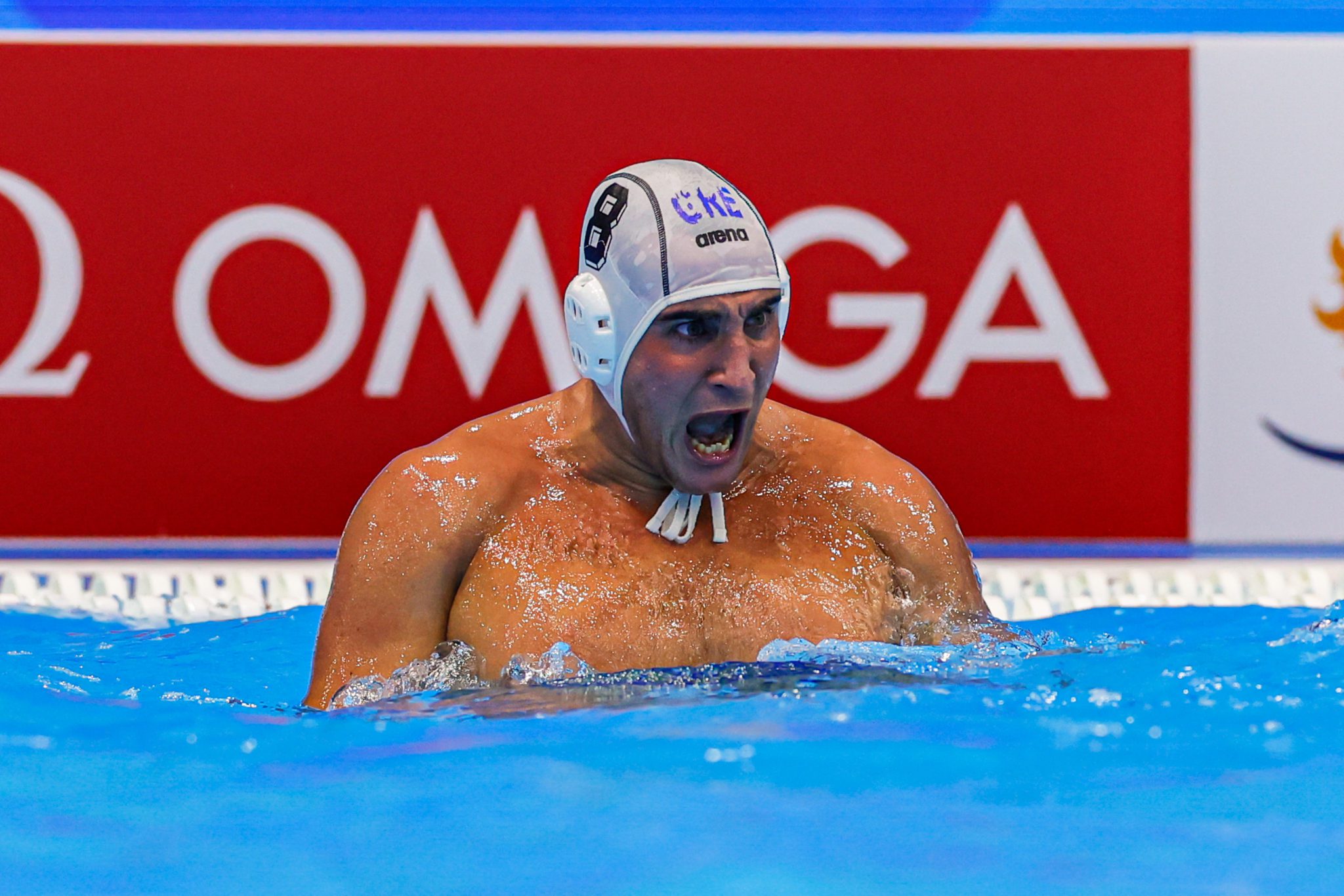
Stylianos Argyropoulos (Greece) Photo by Albert ten Hove/Orange Pictures
Slovakia’s best performance in its 12 appearances in the European Championships was 7th place in 2003.
Great Britain has played 10 times (9 times as Great Britain, and once as England – in 1927), winning 6th place in 1947. The Brits haven’t participated in the ECH since 1993, when they qualified as the hosts.
It seems very unlikely that Romania and Slovakia, which have never won a medal in a major water polo competition, will break their streak of disappointment in Belgrade.
However, Greece, one of the world’s water polo powerhouses over the past decade, stands as a strong favorite to finally reach the podium.
All medal winners
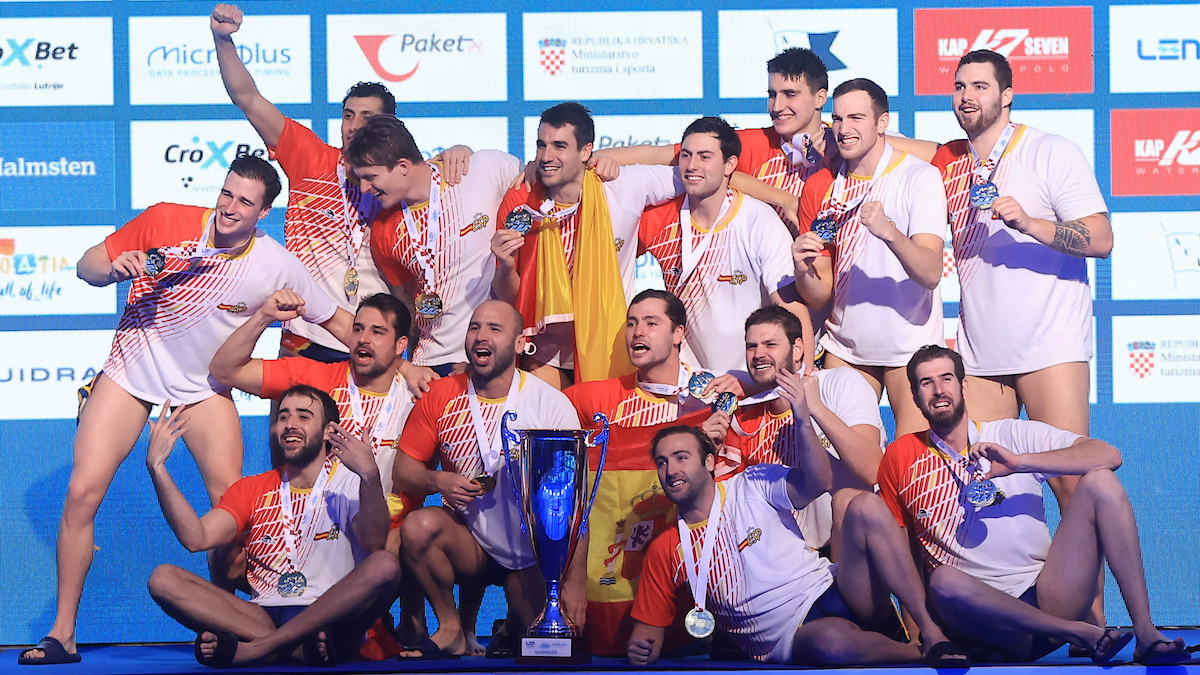
Spain won its first European gold in Zagreb in 2024 Photo by Istvan Derencsenyi/LEN
1926, Budapest: Hungary, Sweden, Germany
1927, Bologna: Hungary, France, Belgium
1931, Paris: Hungary, Germany, Austria
1934, Magdeburg: Hungary, Germany, Belgium
1938, London: Hungary, Germany, Netherlands
1947, Monte Carlo: Italy, Sweden, Belgium
1950, Vienna: Netherlands, Sweden, Yugoslavia
1954, Torino: Hungary, Yugoslavia, Italy
1958, Budapest: Hungary, Yugoslavia, USSR
1962, Leipzig: Hungary, Yugoslavia and USSR (shared 2nd place)
1966, Utrecht: USSR, West Germany, Yugoslavia
1970, Barcelona: USSR, Hungary, Yugoslavia
1974, Vienna: Hungary, USSR, Yugoslavia
1977, Jonkoping: Hungary, Yugoslavia, Italy
1981, Split: West Germany, USSR, Hungary
1983, Roma: USSR, Hungary, Spain
1985, Sofia: USSR, Yugoslavia, West Germany
1987, Strasbourg: USSR, Yugoslavia, Italy
1989, Bonn: West Germany, Yugoslavia, Italy
1991, Athens: Yugoslavia, Spain, USSR
1993, Sheffield: Italy, Hungary, Spain
1995, Vienna: Italy, Hungary, Germany
1997, Sevilla: Hungary, Yugoslavia, Russia
1999, Florence: Hungary, Croatia, Italy
2001, Budapest: Yugoslavia, Italy, Hungary
2003, Kranj: Serbia & Montenegro, Croatia, Hungary
2006, Belgrade: Serbia, Hungary, Spain
2008, Malaga: Montenegro, Serbia, Hungary
2010, Zagreb: Croatia, Italy, Serbia
2012, Eindhoven: Serbia, Montenegro, Hungary
2014, Budapest: Serbia, Hungary, Italy
2016, Belgrade: Serbia, Montenegro, Hungary
2018, Barcelona: Serbia, Spain, Croatia
2020, Budapest: Hungary, Spain, Montenegro
2022, Split: Croatia, Hungary, Spain
2024, Zagreb/Dubrovnik: Spain, Croatia, Italy
Medal table: 1. Hungary 26 (13 gold, 7 silver, 6 bronze medals), 2. USSR 10 (5, 3, 2), 3. Serbia 7 (5, 1, 1), 4. Italy 12 (3, 2, 7), 5. Croatia 6 (2,3,1), 6. FR Yugoslavia/Serbia and Montenegro 3 (2, 1, 0), 7. West Germany 3 (2, 0, 1), 8. SFR Yugoslavia 12 (1, 7, 4), 9. Spain 8 (1, 3, 4), 10. Montenegro 4 (1, 2, 1), 11. Netherlands 2 (1, 0, 1), 12. Germany 5 (0, 3, 2), 13. Sweden 3 (0, 3, 0), 14 – 15. East Germany 1 (0, 1, 0) and France 1 (0, 1, 0), 16. Belgium 3 (0, 0, 3), 17 – 18. Austria 1 (0, 0, 1) and Russia 1 (0, 0, 1).
More articles about the European Championships