
The packed series of four World Aquatics Water Polo Championships, held over just four years, will conclude in two weeks in Singapore.
The first year of a new Olympic cycle is often used by many coaches and national federations in various sports to rejuvenate their teams.
However, many of the top European water polo nations have not made significant changes, opting not to bring in many new, young players.
Italy arrives in Singapore with four debutants competing in major events. Hungary will be without five Olympians, though some of these changes were necessitated by injuries or other reasons. Montenegro, with a new head coach, Dejan Savic, will field a slightly younger team than they had in Paris, although they will also include an experienced newcomer, Dmitrii Kholod. The three reigning champions: Serbia (Olympic gold), Croatia (World gold), and Spain (European and World Cup gold), as well as Greece, have all retained their rosters largely unchanged since the Paris Games.
In contrast to the Europeans, Team USA, the Olympic bronze medalist, has seven players set to make their debut at a major competition. Australia also features several debutants on its roster.
Considering all the facts mentioned above, the European and non-European teams have different goals in Singapore. The European favorites are targeting medals (as usual), while the USA and Australia have already begun preparations for the Los Angeles Olympics.
Therefore, it is likely that European nations will again share the medals, as they have in the previous 21 editions of the World Championships. In the 52-year history of the World Men’s Championships, non-European teams have only reached the semifinals five times. Team USA has finished fourth three times but has not passed its hurdle in the quarterfinals since 2009. Cuba came fourth in 1975, and Australia achieved its best result by finishing fourth in 1998.
All seven European powerhouses are serious contenders for medals. However, the rapid development of American water polo suggests that the USA can be a formidable opponent, even with a younger team. Australia has consistently been a potential surprise contender for years.
22nd World Men’s Water Polo Championships (July 12 – 25), Preview
A Group A: Serbia, Italy, Romania, South Africa
Serbia
World Championships appearances (including 2025): 11. Debuted in 2007 (as a part of Yugoslavia in 1973),
Last three World Championships – 2022: 5th place, 2023: 4th place, 2024: 6th place
Best results: gold (2009, 2015), silver (2011), bronze (2017), 4th place (2007, 2023).
As a part of Yugoslavia and Serbia and Montenegro (until 2005), Serbia won three gold,one silver and four bronze medals.
Italy
World Championships appearances (including 2025): 22. Debuted in 1973.
Last three World Championships – 2022: silver, 2023: 5th place, 2024: silver.
Best results: gold (1978, 1994, 2011, 2019), silver (1986, 2003, 2022, 2024), bronze (1975), 4th place (1973,2001, 2013, 2015)
Romania
World Championships appearances (including 2025): 13. Debuted in 1973.
Last three World Championships – 2022 and 2023: didn’t qualify, 2024: 10th place.
Best results: 5th place (1975)
South Africa
World Championships appearances (including 2025): 14. Debuted in 1994.
Last three World Championships – 2022: 12th place, 2023: 16th place, 2024: 15th place
Best results: 12th place (2015, 2019, 2022)
Group A is suitable for the favorites, Serbia and Italy. They will have good opportunities to improve their shape before the knockout round. Each team will have one straightforward match (South Africa) and one against a solid opponent that isn’t in their category (Romania). Their encounter will be the real test for both teams to see what they are capable of.
Serbia has been waiting for a new medal at the World Championships for eight years. After years of dominance and winning eight gold medals at as many FINA and LEN competitions between 2014 and 2016, the Serbs clinched bronze t the 2017 WCH. In the following years, their rhythm of winning medals slowed, but they managed to retain the Olympic gold in 2021. However, in a shortened 2021 – 2024 Olympic cycle, they faced challenges after several big stars retired. Dejan Savic resigned, and Uros Stevanovic took over as coach, but the team struggled to achieve good results. In the seven major tournaments between Tokyo and Paris, Serbia reached the semifinals only once, finishing in 4th place at Fukuoka in 2023.
A slow start at the Paris Olympics wasn’t promising, but Serbia shone when it mattered the most and won its third consecutive Olympic gold.
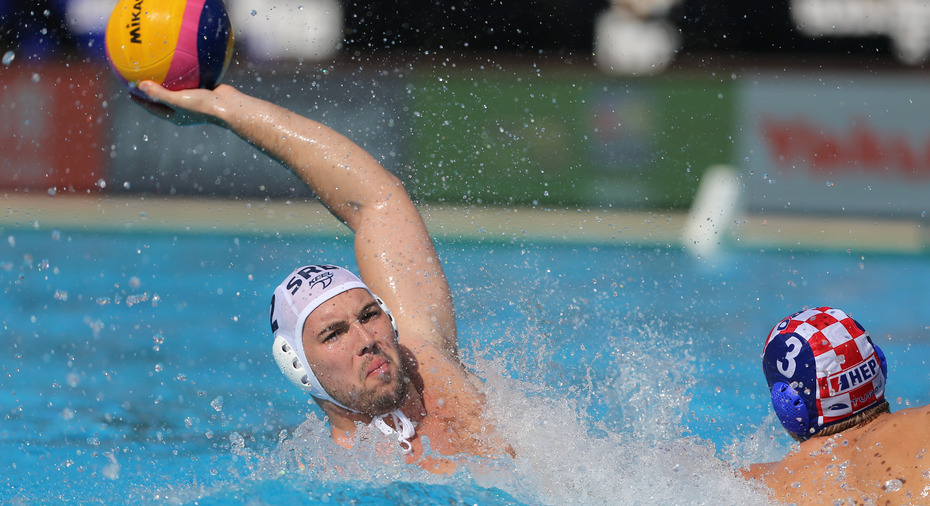
Dusan Mandic (SRB) Photo by S.Sandic/Water Polo Federation of Serbia
The comeback and success at the most important sports event are a good encouragement for Singapore. This year, Serbia entered the World Cup with low ambitions and without its best players, and didn’t qualify for the Final Eight. But, the Singapore tournament is something completely different. The Olympic champions are highly motivated to return to the World Championships podium. The team is very experienced, with ten players who have won Olympic titles and with two newest reinforcements (Vapenski and Murisic). It’s a team that can go high.
Italy, which won three medals at the previous four editions of the World Championships, also has a big motivation to return on the biggest stage in style. In the group stage of the Paris Olympics, the “Settebello” quite convincingly beat two teams that later won medals (Croatia and the USA). However, a loss in the controversial quarterfinal match against Hungary ended their hopes of winning a medal. The way they protested after that game resulted in a six-month suspension, and they weren’t allowed to compete in the World Cup.
Head coach Alessandro Campagna has included four debutants in the roster. However, experienced players who weren’t selected this time remain candidates for future national team competitions. The team’s backbone remains strong, featuring many great aces. The 22nd World Championships are not just a stepping stone for the Italians on their path to Los Angeles; they are aiming to clinch a medal in this competition.
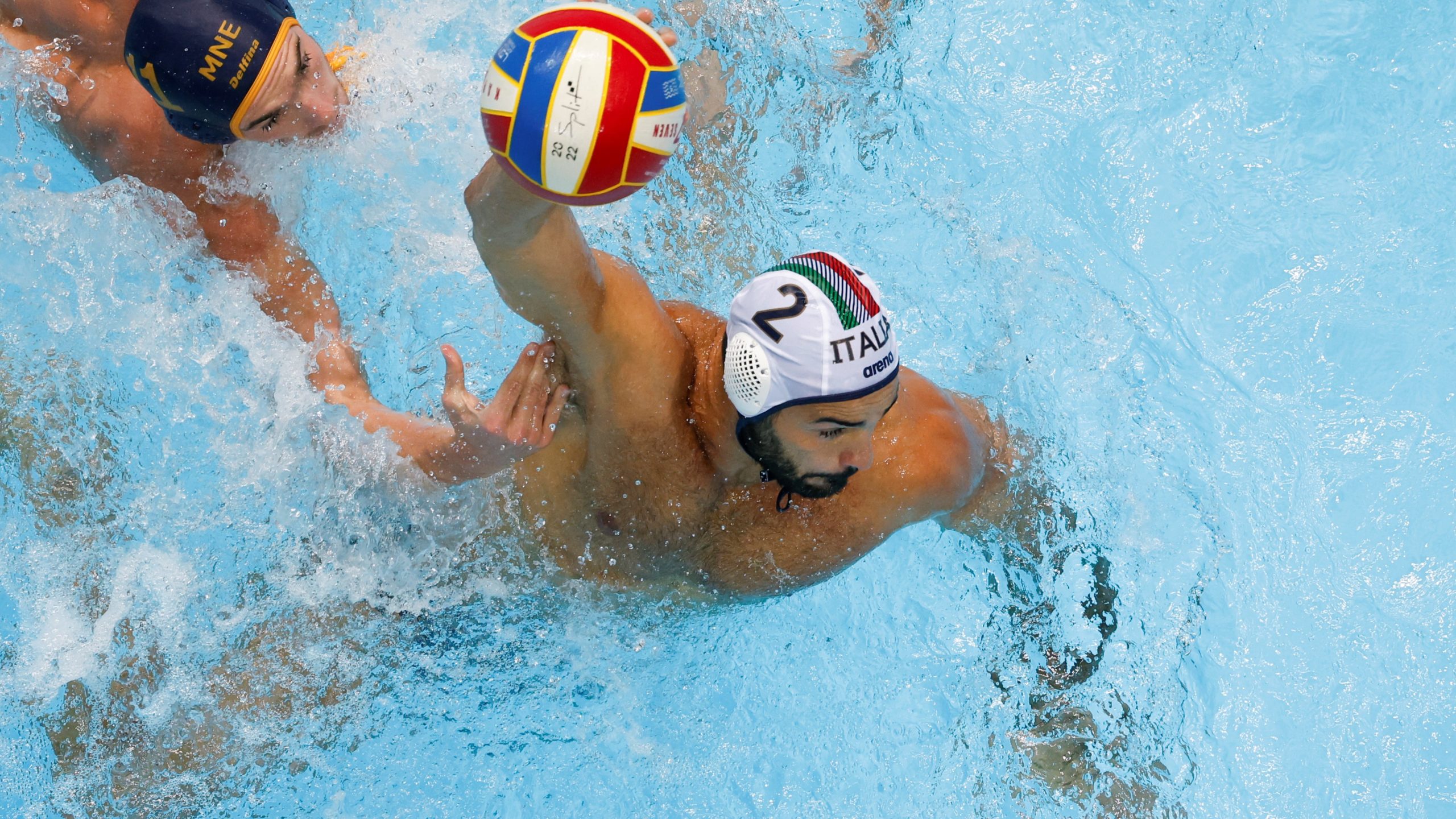
Francesco Di Fulvio Photo: Total Waterpolo
After an eleven-year absence from World Aquatics competitions (2013–2024), Romania has been a consistent participant in major tournaments over the last two seasons. Their 8th-place finish at the 2024 European Championships secured Romania’s tickets for the World Championships in Doha and Singapore, as the Europeans served as a qualification tournament for the two events. Last year, Romania finished 10th in Doha and qualified for the Olympic Games, filling a vacancy created by South Africa’s withdrawal. However, Romania was the only team that did not win any points in Paris. Recent results against their biggest rivals in the group (a 7:18 loss to Italy at the Olympic tournament and a 6:21 defeat to a rejuvenated Serbian team in the 2025 World Cup) don’t leave Romania much hope.
South Africa has regularly participated in the World Championships since 2005, but they have consistently been an underdog. In the previous three editions, the South African team recorded only one win: an 11:10 victory over Kazakhstan in a 15th-place match in Doha. They advanced to the crossover round in Budapest in 2022, but only because Canada was excluded due to a high number of COVID-19 cases within their team. Additionally, they arrived in Singapore with a young team, missing some of their best players due to disputes between the national swimming federation and the newly formed Water Polo Association of South Africa, which World Aquatics has not recognized. All these factors tell everything about the Africans’ chances.
The first gold medal match at the World Men’s Water Polo Championships took place in Madrid in 1986. Previously, the top teams competed in a final group in a round-robin format.
Since then, seventeen finals have been held, with only nine concluding in regular time.
Let’s take a look at those matches that were decided after extra time and penalty shootouts.
The inaugural gold medal match was an epic showdown between Yugoslavia and Italy, held in Madrid in 1986. After 28 minutes of play (a quarter lasted seven minutes at that time), the score was tied at 7:7. In the 1980s, the penalty shootout had not yet been implemented, so the 6-minute extra periods were played until a winner was determined. The teams remained tied after the first, second, and third overtime periods. Just 0.3 seconds before the end of the fourth extra period, Igor Milanovic scored the winning goal for Yugoslavia, finalizing the score at 12:11.
All finals ended in extra periods or penalty shootouts
1986: Yugoslavia – Italy 12:11, after four extra time periods (7:7 regular time)
2003:, Hungary – Italy 11:9, after an extra time (8:8 regular time)
2007: Croatia – Hungary 9:8, after an extra time (7:7 regular time)
2009: Serbia – Spain 14:13 after a penalty shootout (6:6, regular time, 1:1 in extra period, 7:6 in a penalty shootout)
2011: Italy – Serbia 8:7 after extra time (6:6 regular time)
Following the 2011 championships, extra time periods were removed from the rules. Since then, if a game ends in a draw, it proceeds directly to a penalty shootout.
There have been three shootouts in finals since 2011, all occurring at the subsequent three editions of the World Championships.
2022: Spain – Italy 15:14, PSO (9:9 regular time)
2023: Hungary – Greece 14:13, PSO (10:10 regular time)
2024: Croatia – Italy 15:13, PSO (11:11 regular time).
B Group B: Spain, Hungary, Australia, Japan
Spain
World Championships appearances (including 2025): 21. Debuted in 1973.
Last three World Championships – 2022: gold, 2023: bronze, 2024: bronze.
Best results: gold (1998, 2001, 2022), sliver (1991, 1994, 2009, 2019), bronze (2007, 2023, 2024).
Hungary
World Championships appearances (including 2025): 22. Debuted in 1973.
Last three World Championships – 2022: 7th place, 2023: gold, 2024: 7th place
Best results: gold (1973, 2003, 2013, 2023), silver (1975, 1978, 1982, 1998, 2005, 2007, 2017), bronze (1991), 4th place (2011, 2019)
Australia
World Championships appearances (including 2025): 22. Debuted in 1973.
Last three World Championships – 2022: 11th place, 2023: 10th place, 2024: 11th place.
Best result: 4th place (1998).
Japan
World Championships appearances (including 2025): 12. Debuted in 2001.
Last three World Championships – 2022: 9th place, 2023: 11th place, 2024: 13th place
Best result: 9th place (2022)
Two great European teams, Spain and Hungary , are the favorites, but they won’t have easy matches in the group stage.
Spain has been the most successful team in men’s water polo over the past seven years, experiencing minimal fluctuations during that period. Since 2018, sixteen World and European tournaments have been held, and Spain has won 11 medals. However, an Olympic medal is missing from the treasury of the great generation of Spanish water polo players – they lost the bronze medal match in Tokyo. After a dominant display in the group stage in Paris, they were stopped by Croatia in the quarterfinals.
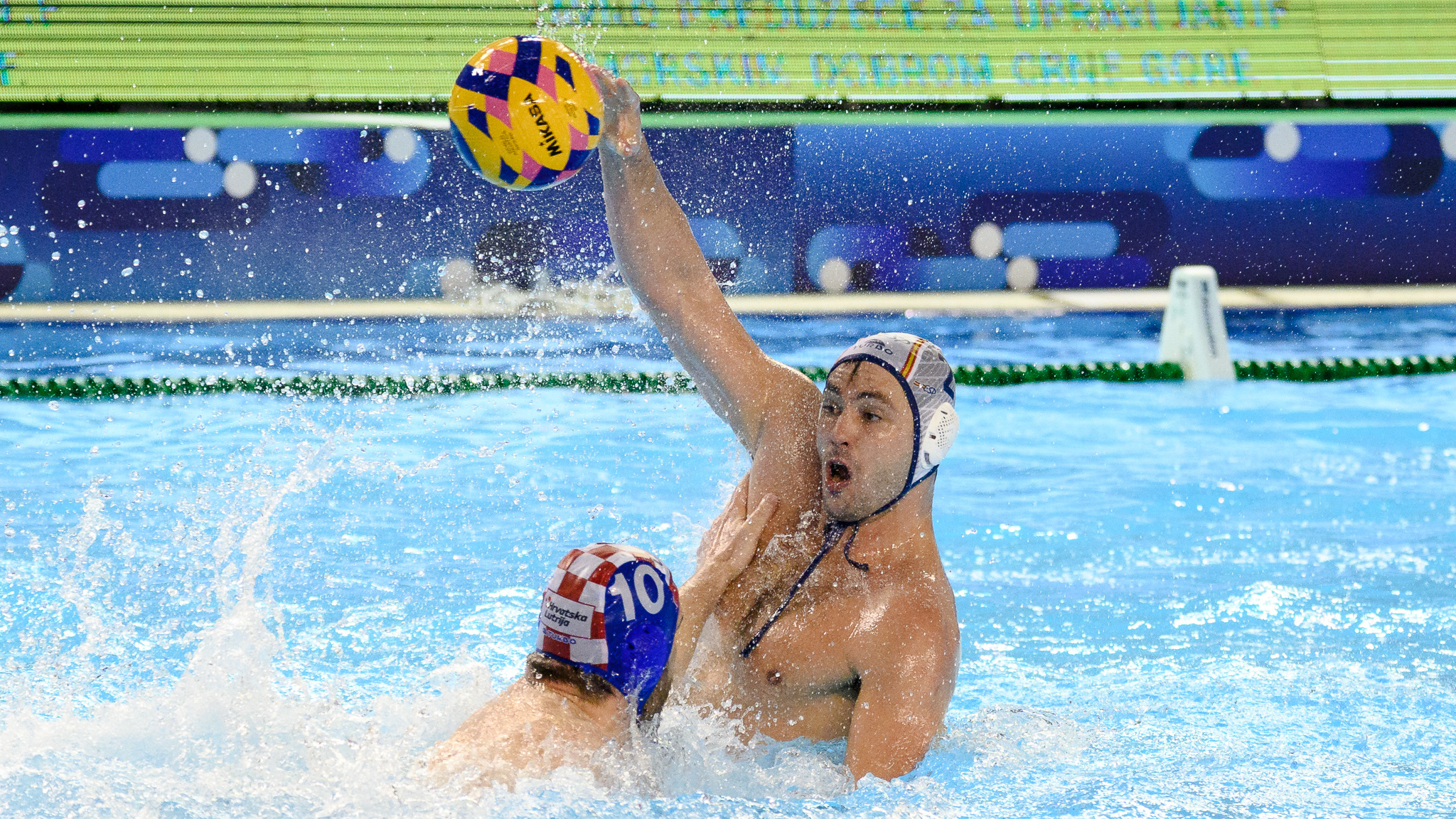
Alberto Munarriz Photo by Krsto Vulovic
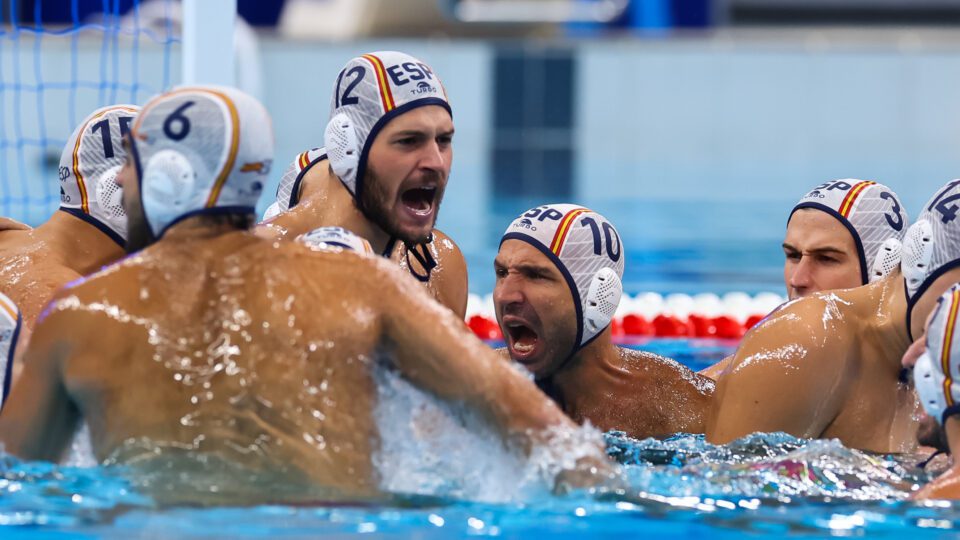
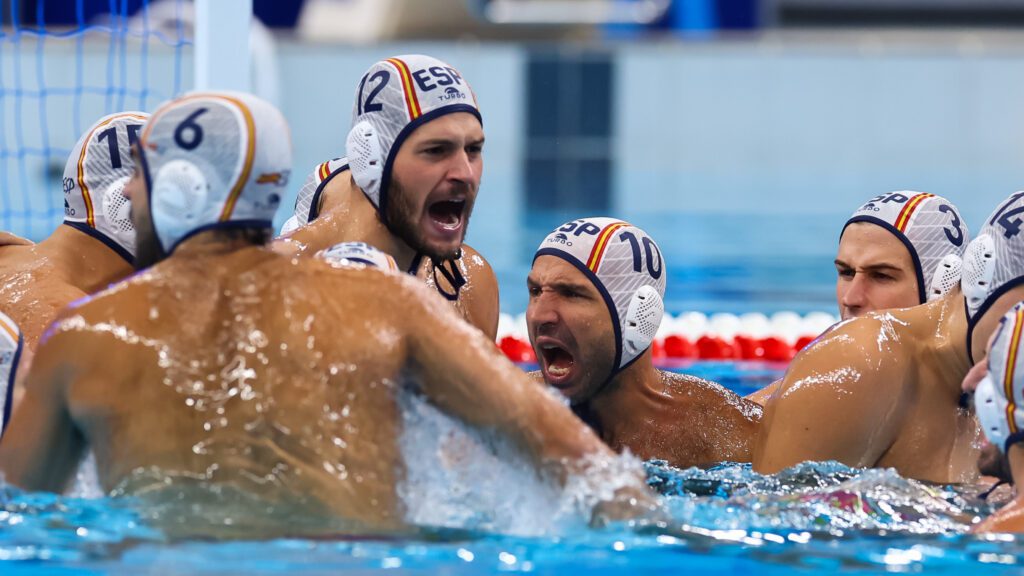
Recently, Spain defended the gold in the World Cup. The team for Singapore is even stronger and more experienced than the one that won the World Cup. All eyes will be on Felipe Perrone. The fact that he will retire after the World Championships is an additional motive for his teammates to make his farewell more beautiful.
Unlike Spain, Hungary has experienced some disappointing moments in recent years. A 7th-place finish at the 2022 World Championships, held in front of a home crowd, led to a coaching change, with Zsolt Varga replacing Tamas Marcz. However, in 2023, Hungary became the World Champion for the first time in a decade. Unfortunately, in 2024, the team returned home empty-handed after finishing 4th at both the European Championships and the Olympic Games, and 7th at the World Championships. The Hungarians are now focused on making up for the opportunities they missed in 2024. They have already secured a bronze medal at the 2025 World Cup, but winning a medal at the World Championships would represent a much greater success.
Since the Paris Olympics, the team has undergone changes—some planned, while others were forced. Nevertheless, the fact that 12 out of the 15 Hungarian players participated in the Champions League Final Four speaks volumes about the team’s potential.
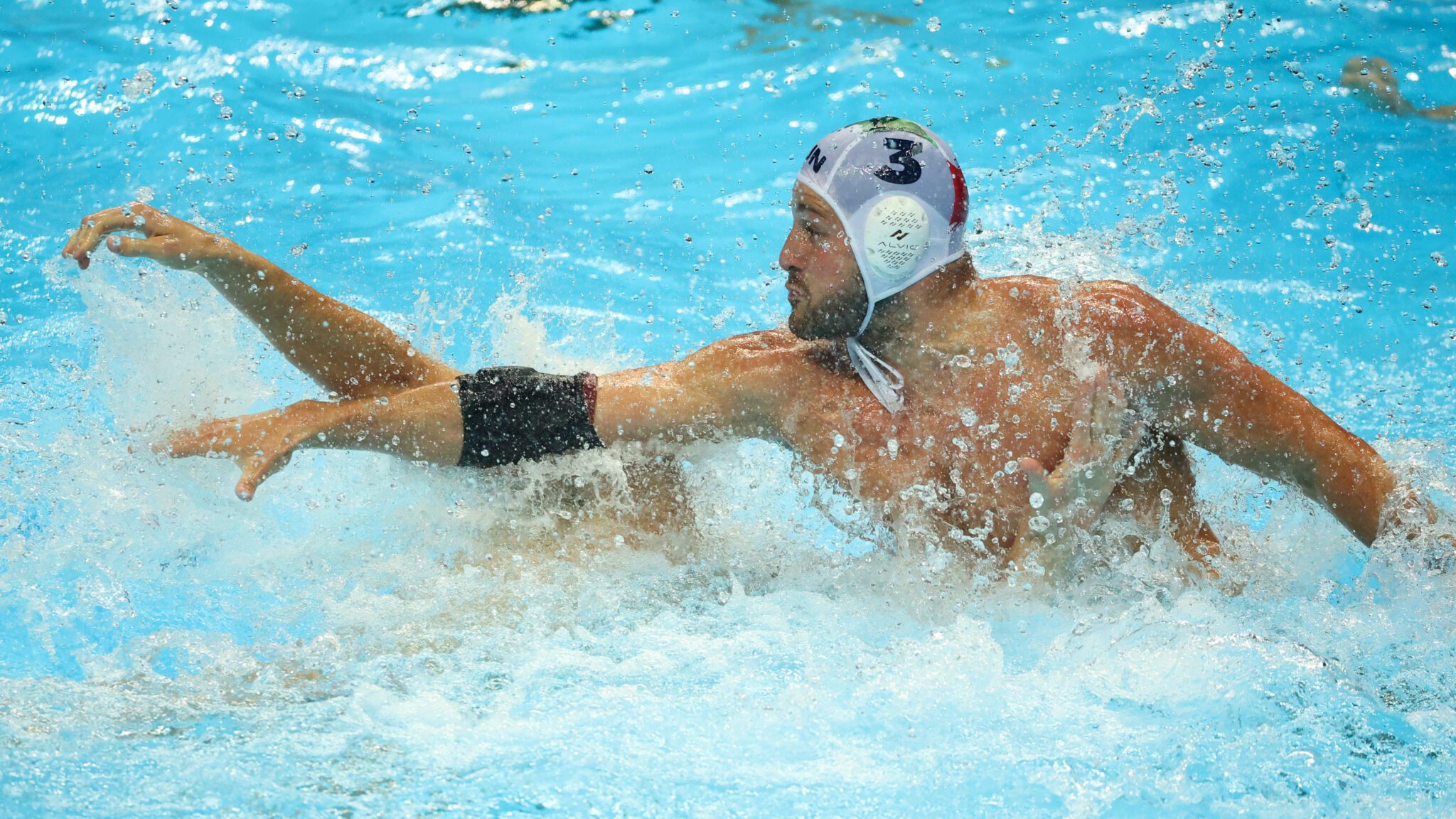
Krisztian Manhercz (HUN) Photo: Total Waterpolo
As already mentioned, Australia will have several debutants on the roster, but it will field a very good team. Last year, the “Sharks” demonstrated that they had developed from a team that was a possible surprise to one that was able to beat great favorites. They outplayed Serbia and defeated Hungary in Paris. The Americans defeated Australia in the quarterfinals only after a penalty shootout. So, underestimating Australia would be a big mistake.
Japan has yet to achieve a victory against a favorite at the big competition. However, over the past several years, they have caused considerable trouble for the great teams and have rarely suffered convincing losses. The European teams have always needed a lot of time to break Japan’s resistance. New rules (shorter field and shorter possession time) might help Japan, given their atypical style of play, which involves a lot of movement. However, they suffered three losses at the World Cup Final Eight, but we’ll see if they learned from their mistakes.
Regardless of Spain’s results at the tournament, Felipe Perrone will be one of the biggest stars of the Championships in Singapore. He will compete at his 13th World Championships in Singapore and will improve his record in terms of appearances.
But, he also has a chance to say goodbye to water polo by equaling another record. If Spain continues its streak and wins a fifth medal at the WCH in a row, Perrone will become the second player (both male and female) with seven World Championships medals. He has won one gold, two silver, and three bronze medals. Only former Croatia’s captain, Andro Buslje, has more medals at the World Championships (two gold, one silver, and four bronze medals won at seven consecutive editions between 2007 and 2019).
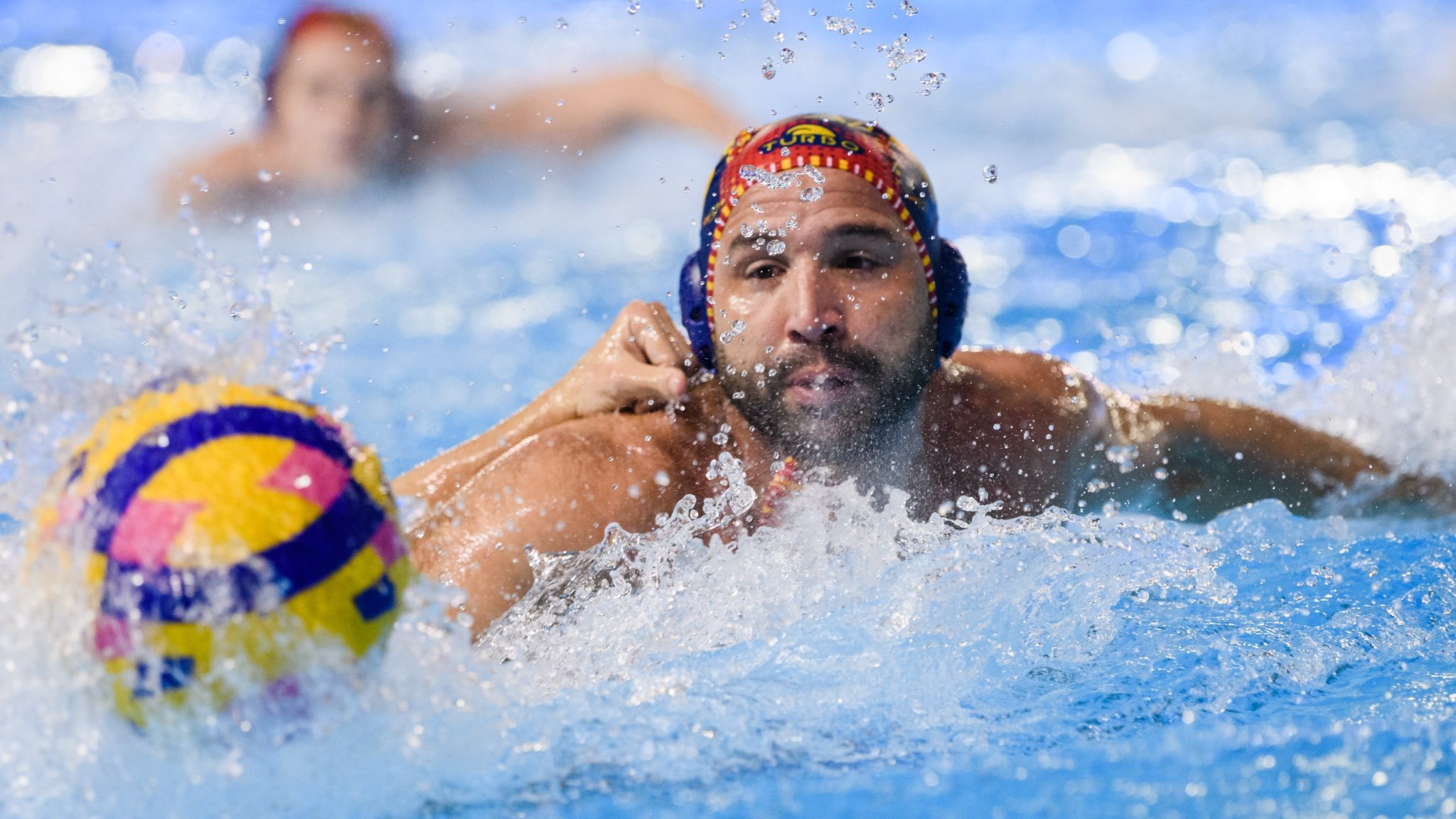
Felipe Perrone Photo by Krsto Vulovic/WPF of Montenegro
The only male water polo player with three gold medals at the World Championships is Serbian water polo ace Slobodan Nikic, who reached the highest step of the podium in 2005, 2009 and 2015 (besides, he has one silver and one bronze).
Five players can catch up with Nikic in the following two weeks. The only five participants of the tournament who have already become the World champions twice are Croats Luka Loncar, Marko Bijac, Loren Fatovic and Ante Vukicevic (winners in 2017 and 2024) and Hungarian Marton Vamos (winner in 2013 and 2023).
C Group C: USA, Brazil, Canada, Singapore
USA
World Championships appearances (including 2025): 22. Debuted in 1973.
Last three World Championships – 2022: 6th place, 2023: 7th place, 2024: 9th place
Best result: 4th place (1986, 1991, 2009).
Brazil
World Championships appearances (including 2025): 12. Debuted in 1986.
Last three World Championships – 2022: 15th place, 2023: Withdrew, 2024: 14th place
Best result: 10th place (2015).
Canada
World Championships appearances (including 2025): 19. Debuted in 1975.
Last three World Championships – 2022: 16th place*, 2023: 12th place, 2024: didn’t qualify
*Canada was excluded from the 2022 WCH during the group stage because of a number of COVID cases in the team.
Best result: 8th place (2009)
Singapore
World Championships appearances (including 2025): 1. Debut in 2025.
At the first World Championships in 1973, the teams were divided into three groups for the initial stage. Since the 1975 edition, the current format of four groups with four teams each has been used.
For the first time in the history of the World Men’s Championships, there will be a group without any European teams in the tournament’s opening phase. This unique situation might lead to an interesting dynamic within the group. But, on the other side, we have a clear favorite and an underdog here.
Despite arriving in Singapore with a young team and only seven players from their Olympic bronze medal-winning squad, the USA is the front-runner in this group. Their mix of experienced players and youthful talent positions them as the top contender to finish first in the group and qualify directly for the quarterfinals.
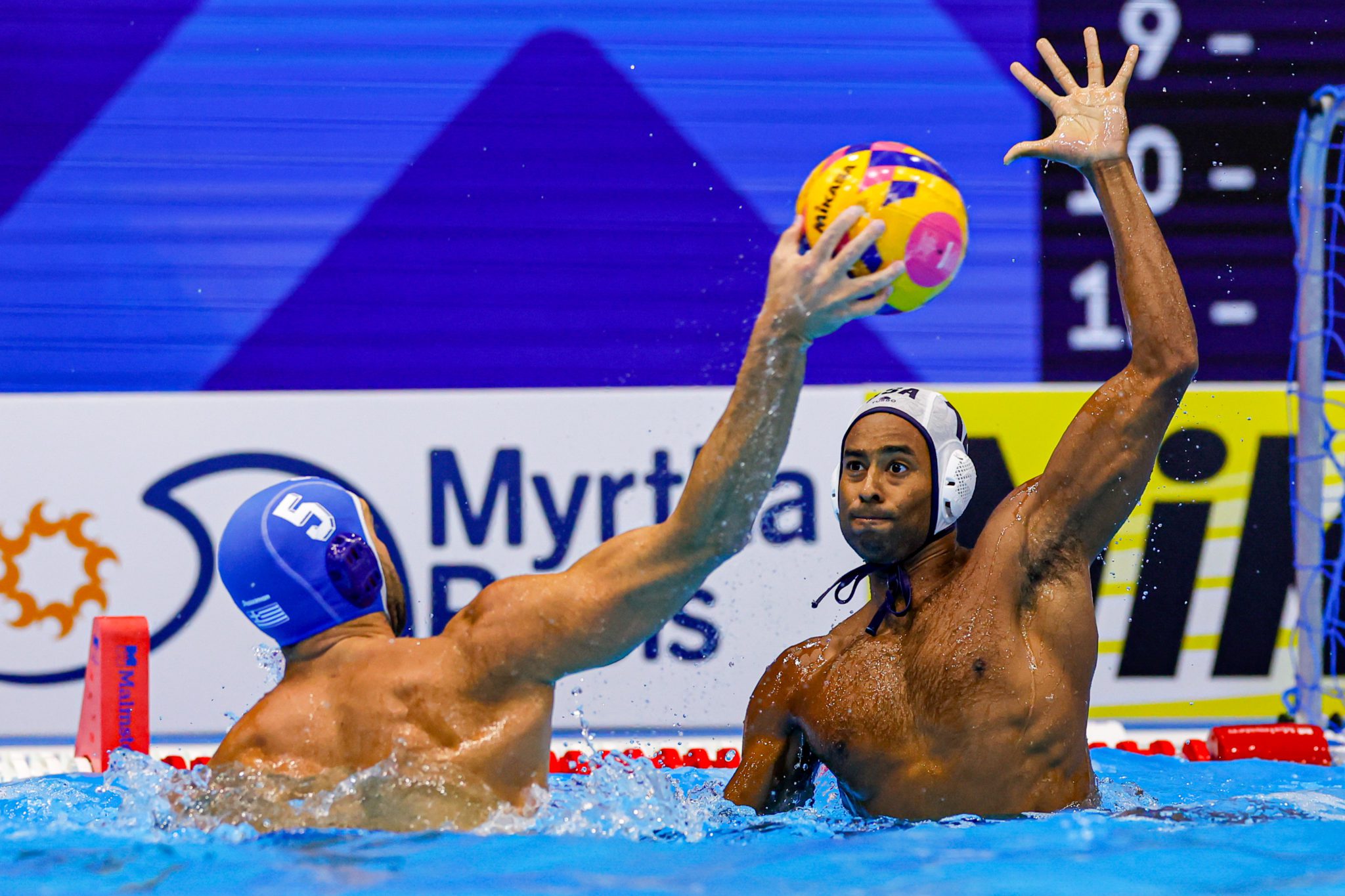
Max Irving, a new captain of Team USA Photo: Orange Pictures
Brazil and Canada are looking to surprise their continental rivals. These teams will provide solid competition for the young American players, allowing them to test their skills against formidable opponents. The match between Brazil and Canada is expected to be the most exciting game in the group and to be decisive for 2nd place. Both teams qualified for the Singapore tournament through the Pan American Championships held in Colombia, where the USA did not compete. Brazil secured gold in Colombia by defeating Canada 8:5. Will the South Americans be able to repeat that win?
Singapore has not achieved significant results in continental competitions. Thus, securing points in the group stage will likely be a “mission impossible” for the hosts. This tournament will primarily serve as an opportunity for them to learn and gain experience in their debut.
D Group D: Croatia, Greece, Montenegro, China
Croatia
World Championships appearances (including 2025): 16. Debuted in 1994 (as a part of Yugoslavia in 1973).
Last three World Championships – 2022: 4th place, 2023: 9th place, 2024: gold
Best results: gold (2007, 2017, 2024), silver (2015), bronze (2009, 2011, 2013, 2019), 4th place (1994, 2005, 2022).
As a part of Yugoslavia (until 1991), Croatia won two gold and two bronze medals.
Greece
World Championships appearances (including 2025): 19. Debuted in 1973.
Last three World Championships – 2022: bronze, 2023: silver, 2024: 5th place
Best results: silver (2023), bronze (2005, 2015, 2022), 4th place (2003, 2017)
Montenegro
World Championships appearances (including 2025): 10. Debuted in 2009 (as a part of Yugoslavia in 1973).
Last three World Championships – 2022: 8th place, 2023: 8th place, 2024: 8th place
Best result: silver (2013)
As a part of Yugoslavia and Serbia and Montenegro (until 2005), Serbia won three gold,one silver and four bronze medals.
China
World Championships appearances (including 2025): 12. Debuted in 1982.
Last three World Championships – 2022: didn’t qualify, 2023: 15th place, 2024: 12th place
Best result: 10th place (1982)
Group D is the only one in which three teams have realistic chances of securing first place and advancing to the quarterfinals without having to play in the crossover round. Tiny details will likely prove crucial in the outcomes.
Croatia is currently the frontrunner. Last year marked the first time that the European Championship, the World Championship, and the Olympic Games were all held in the same season. Croatia was the only team to win a medal in each of these competitions, playing in all three finals in 2024. The Croats won gold at the World Championships and silver medals at both the European Championships and the Olympic Games. Furthermore, they reached the semifinals of the World Cup this year but lost to Hungary in the bronze-medal match.
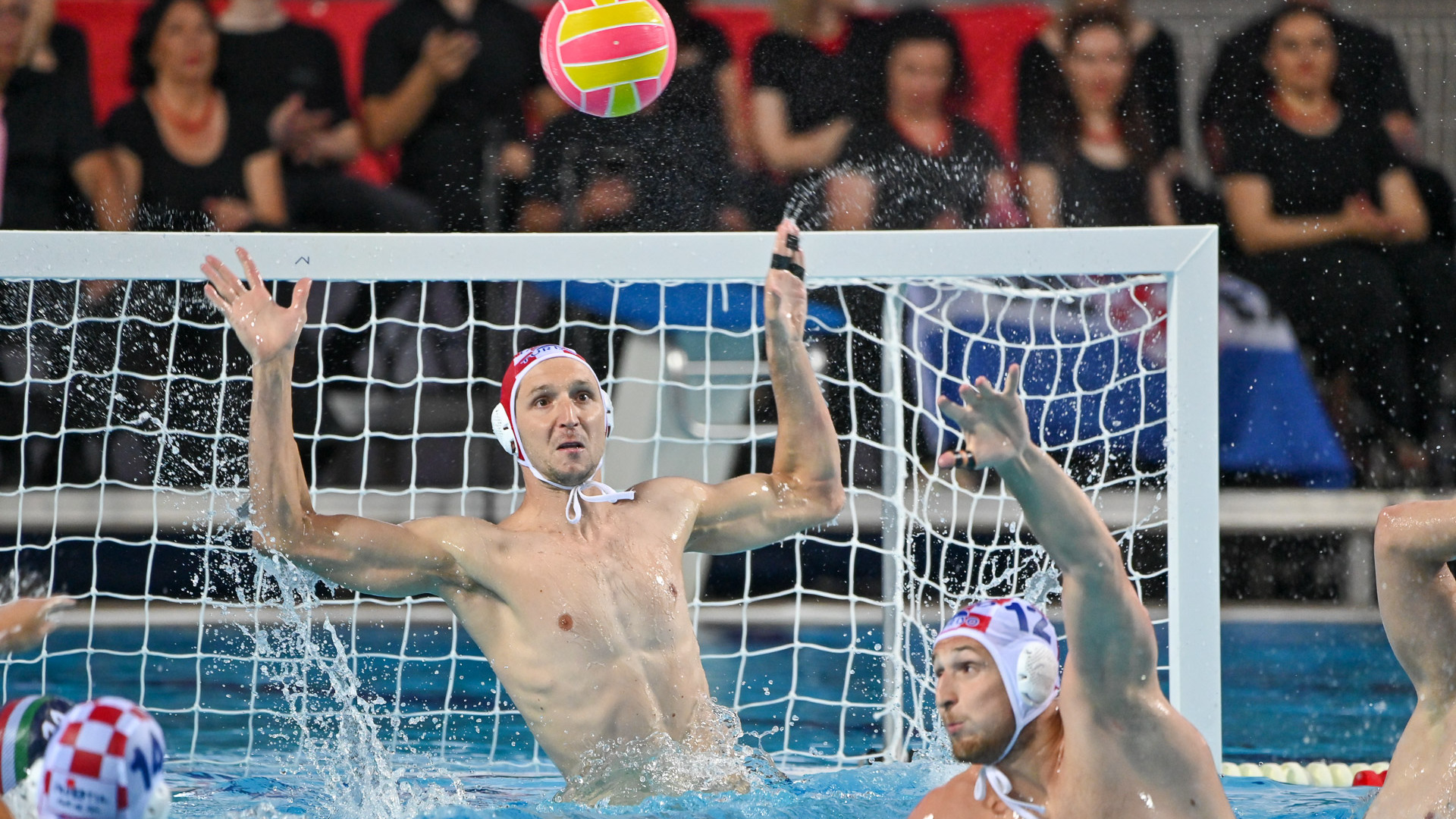
Marko Bijac Photo: Croatian Water Polo Federation/Milan Balaban
The team’s roster remains largely unchanged from last year. Although a few players who held important roles last year are absent, Croatia benefits from a wealth of experience and a well-composed squad, which are among its main advantages.
Croatia won seven medals at seven consecutive World Championships between 2007 and 2019 (two gold, one silver, and four bronze medals), which is the longest winning streak in the history.
That record will be unbroken for long, as the second-longest streak is four medals in a row, achieved by three nations: Hungary (1973 – 1982), Spain (1991 – 2001 and 2019 – 2024), and Serbia and Montenegro (1998 – 2005)
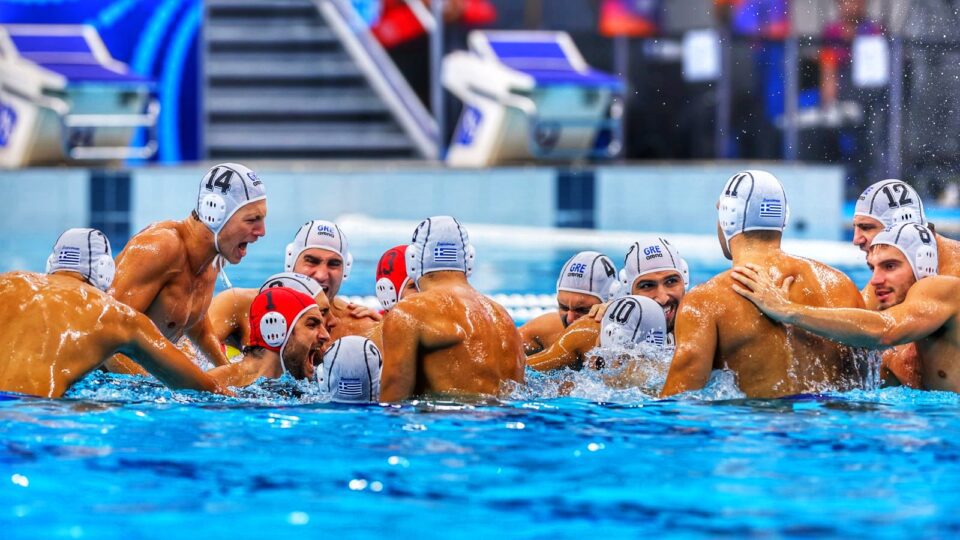
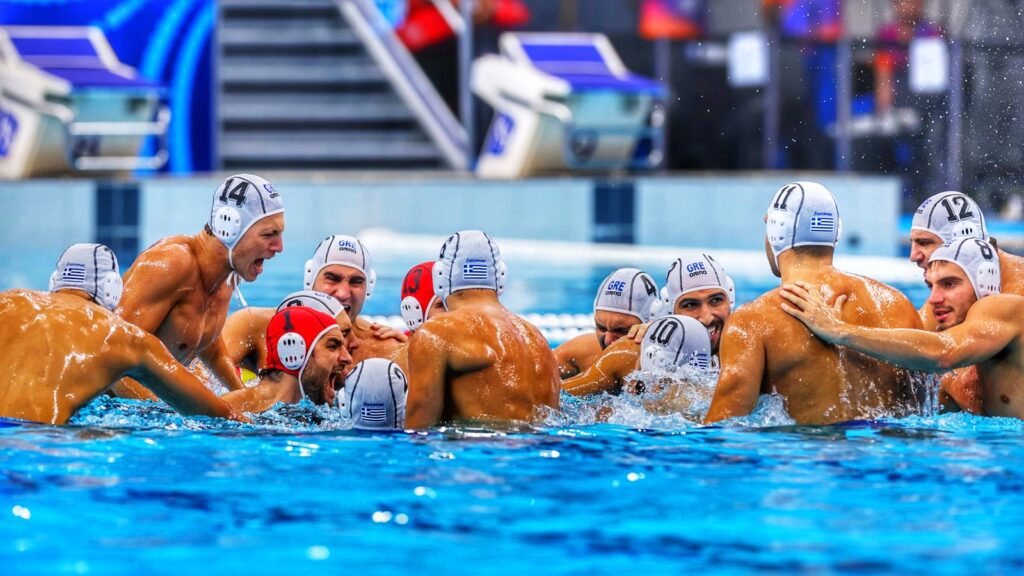
Greece also boasts an experienced and quality team filled with water polo stars. The Greeks have been in contention as favorites for years, but they haven’t garnered many medals. Two years ago, they reached the World Championships final for the first time and took home a silver medal. After finishing 5th at all three tournaments last year, Greece returned to the podium this spring with a silver medal at the World Cup.
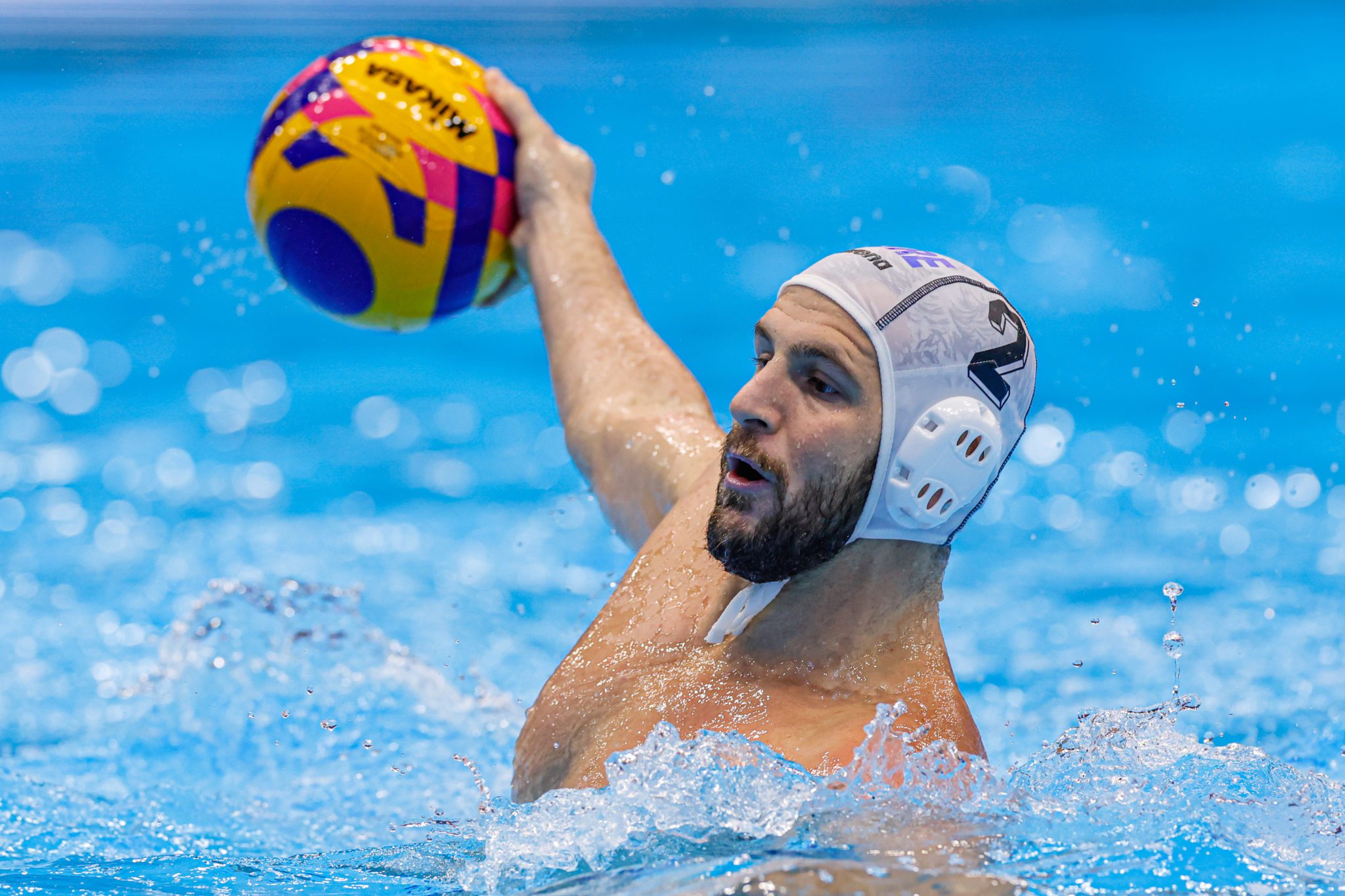
Konstantinos Genidounias Photo by Albert ten Hove/Orange Pictures
They possess the quality to win first place in the group and earn another medal, but other factors will also play a role in determining success. Luck can be a deciding factor in matches between high-caliber teams. Last year, Greece faced unfortunate circumstances, losing in the quarterfinals of both the World Championships and the Olympic Games due to last-minute goals against Italy and Serbia, respectively.
Montenegro made its international debut by winning European gold in 2009. Four years later, they claimed their first and only World Championship medal (silver), but subsequent years have not brought much success. The Montenegrins won the 2021 World League, but since then, they have not advanced to the semifinals. The team entered the 2025 season under new head coach Dejan Savic, who has made several changes to the roster. It remains to be seen if these adjustments will be enough for Montenegro to break their streak of three consecutive 8th-place finishes and improve their standing.
A year and a half ago, China reached the World Championships crossover round for the first time in 15 years. While the Chinese have shown progress as the second-best Asian team, it is difficult to expect them to surprise any of the three European powerhouses or replicate their result from Doha.
Stay tuned to Total Waterpolo for full live coverage from Singapore 2025 — with real-time scoring, deep statistics, and all the stories that matter. You won’t miss a single goal, save, or surprise.Road to medals
- Crossover round (July 18): 2A – 3B (Match 1), 3A – 2B (Match 2), 2C – 3D (Match 3), 3C – 2D (Match 4)
- Quarterfinals (July 20): 1A – winner Match 3 (OF1), 1B – winner Match 4 (QF2), 1C – winner Match 1 (QF3), 1D – winner Match 2 (QF4).
- Semifinals (July 22): winners QF1 – QF2, winners QF3 – QF4.
- Final Day (July 24)
All medal winners
1973 (Belgrade): 1. Hungary, 2. USSR, 3. Yugoslavia.
1975 (Cali): 1. USSR, 2. Hungary, 3. Italy.
1978 (West Berlin): 1. Italy, 2. Hungary, 3. Yugoslavia.
1982 (Guayaquil): 1. USSR, 2. Hungary, 3. FR Germany.
1986 (Madrid): 1. Yugoslavia, 2. Italy, 3. USSR.
1991 (Perth): 1. Yugoslavia, 2. Spain, 3. Hungary.
1994 (Rome): 1. Italy, 2. Spain, 3. Russia.
1998 (Perth): 1. Spain, 2. Hungary, 3. Yugoslavia.
2001 (Fukuoka): 1. Spain, 2. Yugoslavia, 3. Russia.
2003 (Barcelona): 1. Hungary, 2. Italy, 3. Serbia and Montenegro.
2005 (Montreal): 1. Serbia and Montenegro, 2. Hungary, 3. Greece.
2007 (Melbourne): 1. Croatia, 2. Hungary, 3. Spain.
2009 (Rome): 1. Serbia, 2. Spain, 3. Croatia.
2011 (Shanghai): 1. Italy, 2. Serbia, 3. Croatia.
2013 (Barcelona): 1. Hungary, 2. Montenegro, 3. Croatia.
2015 (Kazan): 1. Serbia, 2. Croatia, 3. Greece.
2017 (Budapest): 1. Croatia, 2. Hungary, 3. Serbia.
2019 (Gwangju): 1. Italy, 2. Spain, 3. Croatia.
2022 (Budapest): 1. Spain, 2. Italy, 3. Greece.
2023 (Fukuoka): 1. Hungary, 2. Greece, 3. Spain.
2024 (Doha): 1. Croatia, 2. Italy, 3. Spain
More articles about the World Championships
More articles about the World Championships